Is running a bot on Natural8 even worth it?
Short version. On a shared platform like GGNetwork, a bot's EV is a long-game number. It is built over tens of thousands of hands and holds only while the account stays healthy, so detection risk, frozen balances and confiscation belong in the math from day one. The same security thinking that keeps a bot account healthy protects any other account too, so this page is half "how the long game actually pays" and half a practical account-security checklist (2FA, device hygiene, behavioural flags) that any Natural8 player should follow regardless.
Run the expected-value math honestly
"Is it worth it" asks about expected value, not how botting feels. An estimate should weigh steady volume against costs that cheap botting pitches omit:
- Confiscation on top of a ban. When a bot is confirmed, platforms commonly void winnings and seize the balance, sometimes redistributing it to the opponents the bot played. Your "profit" can become a loss of the full account balance in one action. That downside is why the health of the account matters more than the result of any single session.
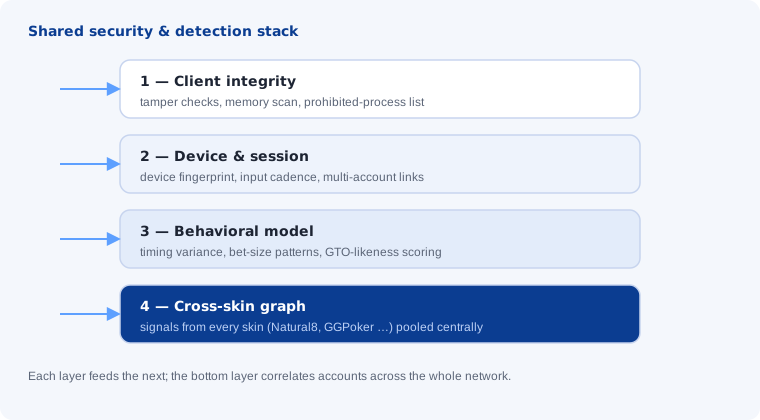
- Detection is continuous. On a cross-skin platform, the behavioural model keeps looking at an account for as long as it plays. A pattern that does not vary like a human's stands out over time; human-like timing, varied bet sizes and gradual volume turn that into a risk you manage.
- How the software is paid for. A monthly rental, or a seller who takes a cut, charges you whether the month went well or not, and that eats a thin edge before it can build. A one-time license is paid once, so over months of steady volume it stops weighing on the result.
- Collateral accounts. Because account-linking is strong, a single confirmed bot can take down associated accounts that shared a device or fingerprint, including ones you intended to keep clean.
A rushed setup that fills tables and rents its software by the month has a small upside and a large, sudden downside. A patient setup uses a one-time license, human-like play and gradually increasing volume. Poker results depend on performance over time. Clients who play steady volume that way report the license paying for itself over months.
The behavioural flags that close accounts
You do not need to be a "bot" to trip these. The same flags catch unsanctioned assistance and seat-selling.
Mechanical timing
Humans hesitate inconsistently. Action times that cluster too tightly, or react faster than a person can read the board, read as automation.
Inhuman consistency
Bet sizing and line selection that never drift, never tilt and never make a "human" mistake are a signature, not a strength.
Session shape
Marathon sessions with no fatigue, identical break patterns, or 24/7 table presence look like a schedule, not a person.
Device & network links
Multiple accounts behind one fingerprint or proxy cluster get correlated. The graph does not care which skin each account is on.
Account security: protect the account you actually own
For a hand-played account and a bot account alike, the everyday risks are account takeover, payment fraud and accidental policy trips.
1. Turn on 2FA and lock the email
Enable two-factor authentication on the poker account, and protect the email it recovers to with its own strong password and 2FA. Most account thefts start with the email, not the poker client.
2. Keep one clean device profile
Play from a device you control, on software you keep updated. Avoid sharing a device or network with accounts you do not want linked. If a household shares a connection, expect the platform to see the relationship; that is normal, but be aware of it before opening multiple accounts.
3. Do not bolt on unvetted tools
External HUDs, scrapers and "assistants" that read the table outside the Smart HUD boundary can trip the same integrity checks as a bot, even if you never intended to automate. Random forum tools and "free hack" downloads are the worst case because they hook into the client crudely and often carry malware. Run nothing on your poker machine that you have not vetted, and test any serious software in a free trial before trusting an account to it.
4. Keep your behaviour boringly human
Take real breaks, vary your sessions, and do not optimise away every human signal; perfect regularity is exactly what the model is looking for. The same holds for a bot: timing that varies with the spot, varied bet sizing, normal stack sizes and a table count a person could play. Slightly inconsistent play is the lowest-risk profile there is.
| Action | Why it matters |
|---|---|
| 2FA on account + email | Blocks the most common takeover path |
| One controlled device | Prevents accidental account-linking |
| No unvetted table tools | Avoids integrity flags and malware |
| Human session rhythm | Keeps behaviour close to a human baseline |
| Strong, unique passwords | Limits damage from any leak |
A note for the Israeli market
Natural8 is the brand many international players, including in Israel, see first, but the platform behind it is GGNetwork, with all the cross-skin detection that implies. Local players should also weigh the legal and tax treatment of online poker in their own jurisdiction before depositing. Nothing on this page is legal or financial advice; it is an account-security and risk perspective.
Bottom line
The downside (confiscation, linked-account loss) is real, so it is managed with discipline and good account security, while the upside comes from steady volume over months on a license paid for once. In the chat the team tells you whether your client is supported and can set up a free test there; the test checks the interface and real-time decisions, and profit is judged over distance.